Dog Limping: What the Limp Means and What to Do Next
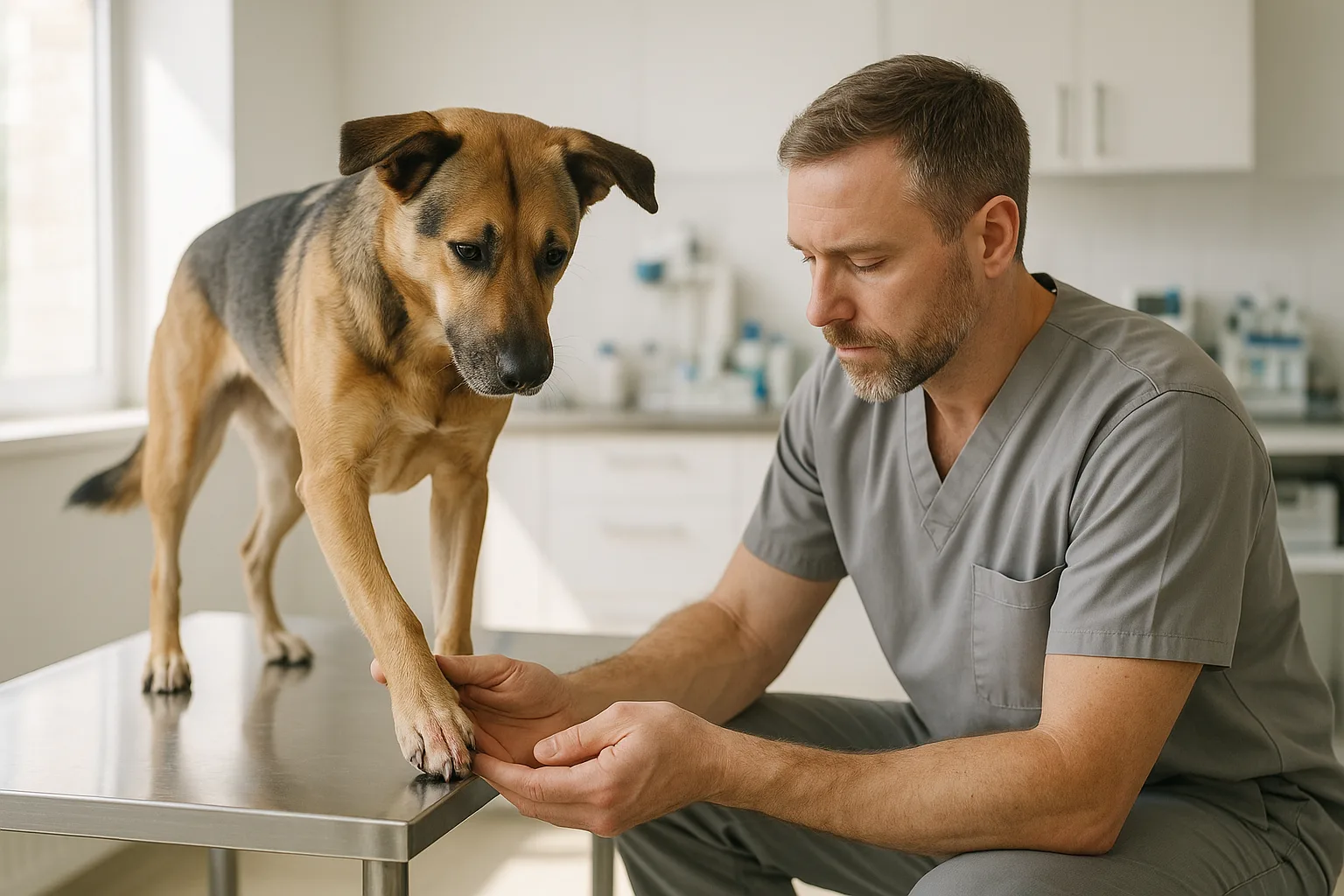
Dog limping is one of those problems that can look minor and turn out to be something more serious. Sometimes it is a sore pad or a thorn in the foot. Other times it is a sprain, a torn knee ligament, or pain higher up in the leg.
This guide walks you through what to check first, what to avoid doing at home, and when 1st Ave Animal Hospital should take a look. The goal is simple: help you make a smart call without guessing.
Why is my dog limping?
Dog limping usually means pain, weakness, or stiffness somewhere in the leg, paw, hip, back, or even the nails. A limp can be sudden after a jump or rough play, or it can build slowly over days from arthritis, infection, or a growth.
The tricky part is that the visible problem is not always the real source. A dog may hold up a front paw because of a broken nail, while another dog limps on a back leg because the knee is unstable. Same sign. Very different causes.
Common causes of dog limping
- Paw injuries: cuts, foxtails, thorns, burned pads, or something stuck between the toes.
- Broken or torn nails: these can bleed a lot and hurt more than people expect.
- Sprains and strains: often after a hard run, jump, or awkward landing.
- Knee problems: including cranial cruciate ligament injury, which is a common reason for hind-leg limping.
- Hip or elbow disease: especially in larger dogs or dogs with a long history of stiffness.
- Arthritis: usually causes a slower, less dramatic limp that comes and goes.
- Bone infection or fracture: more likely if the limp is severe or the dog won’t bear weight.
What should I check at home first?
A careful home check can give you useful clues without making things worse. If your dog is calm and willing, look at the paw, nails, and leg from toe to hip. Stop if your dog is painful, snapping, or trying to hide.
Do not force a sore leg through a full range of motion. Gentle inspection is fine. Poking and stretching are not.
A simple 5-minute check
- Watch the walk first. Is the dog barely touching the leg down, or just taking shorter steps?
- Check the paw pads. Look for cuts, swelling, stuck debris, redness, or a foreign object.
- Look at the nails. A cracked, split, or dangling nail can cause sudden limping.
- Feel for heat or swelling. Compare the painful leg with the same leg on the other side.
- Notice the pattern. Is the limp worse after rest, after exercise, or only on slippery floors?
If your dog will let you, a cold pack wrapped in a towel for 10 minutes can sometimes help mild soft tissue soreness during the first day. Skip this if the area is obviously open, bleeding, or if your dog resists strongly.
When is dog limping an emergency?
Severe limping, a non-weight-bearing leg, or limp plus obvious distress should be treated as urgent. A dog that cannot place the foot down, has major swelling, or yelps when touched may have a fracture, dislocation, or serious soft tissue injury.
Any limping with a deep wound, heavy bleeding, a dangling limb, or a sudden collapse needs immediate veterinary attention. So does a limp after a car strike or a fall from height. No waiting around for that one.
Go to the vet right away if you notice:
- The leg is dangling at an odd angle
- Your dog cannot bear weight at all
- There is rapid swelling
- You see bone, a deep cut, or active bleeding that won’t stop
- The limping follows trauma such as a car accident
- Your dog seems weak, shaky, or unusually quiet
Can I give my dog pain medicine at home?
Human pain medicines are a bad idea unless a veterinarian specifically tells you otherwise. Ibuprofen, naproxen, acetaminophen, and similar drugs can be dangerous for dogs, even in small amounts.
If your dog is limping, the safest move is to rest the dog and contact your veterinarian for the right next step. If your dog already has prescribed medication from a previous visit, call first before giving anything. Dosing changes matter.
Important: Never give your dog over-the-counter pain relievers meant for people without veterinary guidance.
Should I rest a limping dog or keep them moving?
Short, controlled rest is usually the right first step for mild limping. Running, jumping, roughhousing, stair climbing, and fetch can turn a small strain into a bigger one fast.
For many mild cases, a day or two of leash walks for bathroom breaks only is wiser than “seeing if it shakes out.” If the limp is still there after 24 to 48 hours, or if it worsens, the dog should be examined.
What rest should look like
- Leash walks only for bathroom trips
- No stairs unless needed and supervised
- No ball chasing, wrestling, or jumping on furniture
- Use a crate or small room if your dog will not settle
When should a limp be checked by a vet?
A limp that lasts more than a day or two, keeps returning, or clearly hurts needs a veterinary exam. Even if the dog seems fine between episodes, recurring dog limping can point to arthritis, a ligament injury, or a paw problem that never fully healed.
You should also book a visit sooner if the limp started after exercise and the dog is still favoring the leg after rest. Dogs are good at masking pain. That does not mean the pain is gone.
Vet visit timing by situation
| What you see | What to do |
|---|---|
| Mild limp after play, still weight-bearing | Rest and monitor closely for 24 hours |
| Limp lasts more than 24 to 48 hours | Schedule a veterinary exam |
| Non-weight-bearing leg | Seek urgent veterinary care |
| Swelling, wound, or bleeding | Call the clinic the same day |
| Repeated limping in the same leg | Book an exam even if it improves |
What will the vet check for?
A veterinarian will usually start with a hands-on orthopedic exam and pain assessment, then narrow the cause based on where the dog reacts. The exam may include checking each toe, the nails, joints, muscle mass, and range of motion.
Depending on the findings, the next step may be X-rays, sedation for a better joint exam, or further testing if infection or a deeper problem is suspected. 1st Ave Animal Hospital can also help decide whether the issue is likely soft tissue, joint-related, or something that needs imaging right away.
How can I prevent dog limping?
Not every limp can be prevented, but a few habits lower the risk. Keep nails trimmed, protect paws from rough ground, and avoid sudden weekend “athlete mode” after a sedentary week on the couch.
Weight control matters too. Extra pounds put more strain on joints and make arthritis and ligament injuries more likely to show up sooner.
- Trim nails regularly so they do not split or catch
- Check paws after hikes, snow, hot pavement, or rough play
- Keep exercise consistent instead of sporadic and intense
- Maintain a healthy body condition score
- Follow your vet’s plan for arthritis or joint support
Frequently Asked Questions
Why is my dog limping but not crying?
Dogs often hide pain well. A dog can be limping from a sprain, torn ligament, sore paw, or arthritis without vocalizing. Quiet limping still matters, especially if it lasts more than a day, worsens after rest, or keeps coming back in the same leg.
Can a dog limp from a nail injury?
Yes. A split nail, torn nail bed, or nail that has caught on something can cause sudden limping and a lot of discomfort. Some dogs lick the foot constantly or avoid putting weight on it. Bleeding, swelling, or a dangling nail should be checked by a veterinarian.
How long should I wait before taking my dog to the vet for limping?
If the limp is mild and your dog is still using the leg, a short period of rest is reasonable. If the limp does not improve within 24 to 48 hours, gets worse, or returns after rest, schedule a veterinary exam. Severe limping should not wait.
Is limping in a puppy always serious?
Not always, but it should not be brushed off. Puppies can limp from overuse, minor injuries, growth-related problems, or an issue in the paw or joint. Because young dogs grow fast, a lingering limp is worth a veterinary check, even if the puppy still wants to play.
What should I bring to the appointment for dog limping?
Bring a short video of the limp if you have one, a list of any recent falls or rough play, and notes about when the limping started. If your dog is on supplements or medication, bring those details too. Small clues can make the exam much more useful.
If your dog is limping and you are not sure how serious it is, the team at 1st Ave Animal Hospital can help you sort out the next step and decide whether your dog needs an exam, rest, or imaging. For cases that may need further workup, our veterinary services page is a good place to start.