Why Is My Dog Coughing? Causes, Clues, and Next Steps
A dog coughing can be nothing more than an irritated throat. It can also be the first clue that something bigger is going on. This guide explains the common causes, the cough sounds that matter, and what to do before the problem snowballs.
If you want a clinic that can sort out respiratory signs, heart concerns, and other hidden causes, 1st Ave Animal Hospital has the tools to help, including a full range of veterinary services.
Why is my dog coughing?
A dog cough is a reflex that clears the airways. The cause may be as simple as dust or a throat tickle, but coughs also happen with infections, airway collapse, heart disease, and lung problems. The pattern of the cough matters almost as much as the cough itself.
- Short, dry cough: Often seen with kennel cough or throat irritation.
- Honking cough: Can point to tracheal collapse, especially in small dogs.
- Wet or gurgly cough: May suggest fluid, pneumonia, or another lower airway issue.
- Cough with gagging: Can happen after eating, drinking, or excitement.
A single cough after a drink of water is one thing. A cough that repeats all day is another. The repeat pattern is the part to watch.
What are the most common causes of coughing in dogs?
The most common causes of dog coughing include contagious respiratory infection, airway irritation, heart disease, collapsing trachea, allergies, and less commonly pneumonia or foreign material stuck in the throat. A veterinarian usually sorts these out by listening to the chest, asking about exposure history, and deciding whether imaging or lab tests are needed.
1. Kennel cough and other respiratory infections
Kennel cough is a broad term for contagious respiratory illness in dogs. It often causes a dry, hacking cough that sounds harsh and can linger for days or weeks. Dogs pick it up in boarding facilities, grooming salons, dog parks, and anywhere dogs mix closely.
Other infections can produce fever, nasal discharge, low energy, and appetite loss. If coughing started after exposure to other dogs, that detail is useful.
2. Heart disease
Heart disease can lead to coughing when the heart enlarges or when fluid backs up into the lungs. Dogs with heart-related cough may also tire easily, breathe faster at rest, or seem less interested in exercise. Some owners notice the cough more at night or after lying down.
Heart coughs do not always sound dramatic. A mild, stubborn cough in an older dog deserves attention.
3. Collapsing trachea
Tracheal collapse is common in small and toy breeds. The cough often sounds like a goose honk and can flare up with excitement, pulling on the leash, heat, or pressure on the neck.
A harness is usually kinder than a neck collar for dogs with suspected airway problems.
4. Allergies or airway irritation
Pollen, smoke, dust, cleaning sprays, and dry air can all irritate the airways. These coughs may come and go, and they sometimes show up with sneezing or watery eyes. The home environment matters more than many people think.
5. Pneumonia, parasites, and foreign material
Pneumonia tends to make dogs feel sick, not just cough. Lungworms, heartworms, and bits of grass or food inhaled into the airway can also trigger coughing. These cases often need prompt veterinary care.
Which cough signs mean my dog needs a vet visit?
Any cough that lasts more than a few days, keeps coming back, or changes your dog’s breathing pattern should be checked by a veterinarian. Emergency care is needed if coughing comes with blue gums, trouble breathing, collapse, severe weakness, or a swollen abdomen. Those signs are not normal and should be treated as urgent.
- See your vet soon: cough lasting more than 48 to 72 hours, coughing fits, reduced energy, poor appetite, or nasal discharge.
- Seek urgent care: labored breathing, open-mouth breathing at rest, fainting, blue or gray gums, or sudden collapse.
- Book a non-urgent exam: mild cough that keeps returning, especially in older dogs or dogs with known heart disease.
Rule of thumb: If the cough is changing how your dog breathes, eats, sleeps, or moves around, it deserves a vet exam.
What can I do at home before the appointment?
Home care should keep your dog calm and reduce airway irritation. It should not replace a diagnosis, especially if the cough is persistent or your dog seems unwell. Small changes at home can still make the next step easier.
- Use a harness instead of a collar. Pressure on the throat can worsen coughing.
- Keep your dog away from other dogs. Contagious illness spreads quickly.
- Avoid smoke and strong cleaners. Fumes can keep the cough going.
- Write down the pattern. Note when the cough happens, what it sounds like, and whether exercise makes it worse.
- Take a short video. A phone recording can be very helpful in the exam room.
Do not give human cough medicine unless your veterinarian specifically tells you to. Some products are unsafe for dogs, and the wrong dose can do real harm.
How do veterinarians figure out the cause?
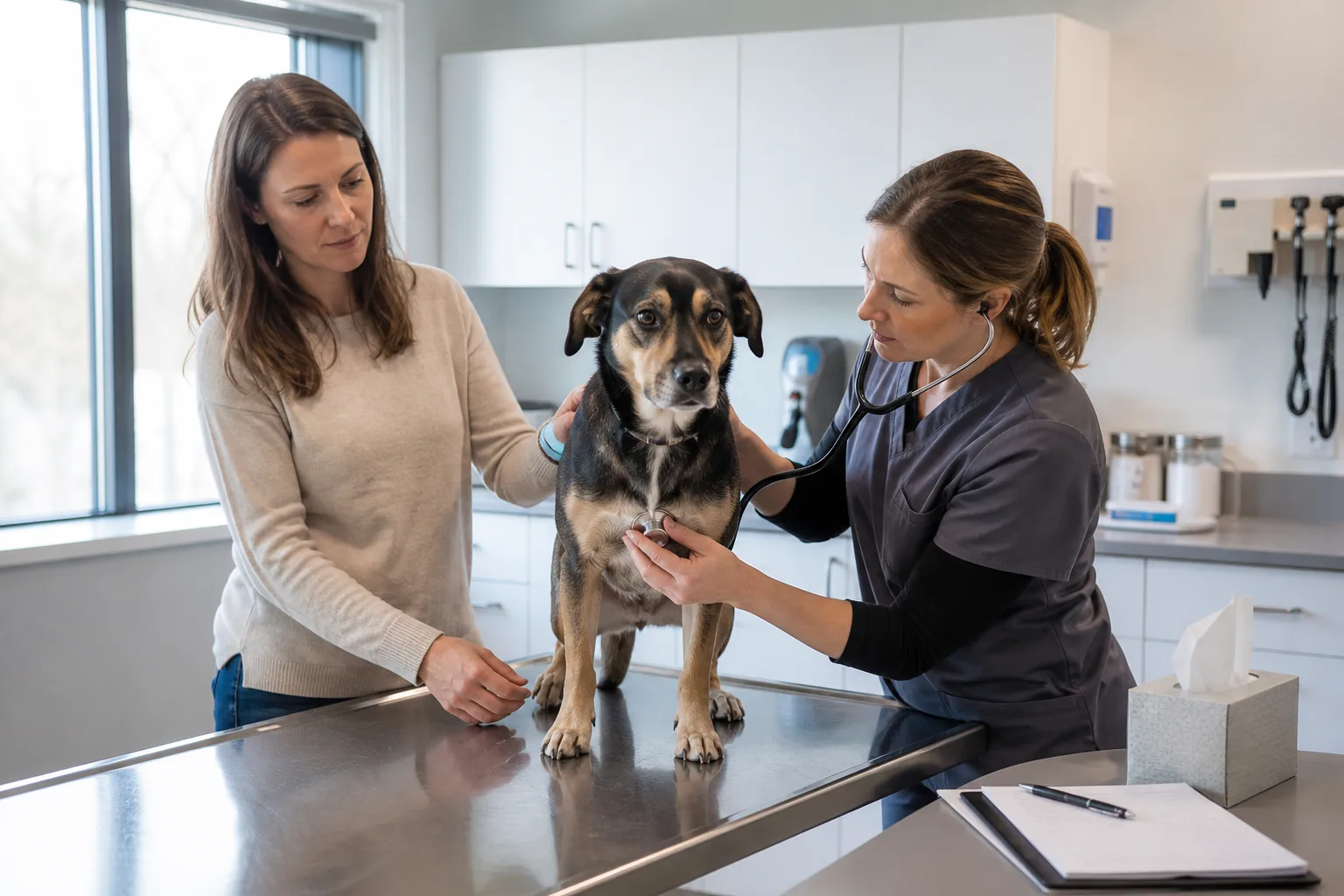
Veterinary diagnosis starts with history and a physical exam. A veterinarian will listen to the heart and lungs, ask about exposure to other dogs, and look for clues such as fever, nasal discharge, or exercise intolerance. Depending on the findings, the next step may be chest radiographs, heart testing, parasite screening, or airway evaluation.
For dogs where chest imaging is likely to help, veterinary radiology services at 1st Ave Animal Hospital can reveal whether the problem looks like infection, heart enlargement, fluid, or something else entirely.
Common diagnostics your vet may recommend
- Chest radiographs: help evaluate the lungs, heart, and trachea.
- Heartworm testing: important in dogs with cough and mosquito exposure risk.
- Bloodwork: helps check for infection, inflammation, and overall health.
- Airway or parasite testing: used when the history points in that direction.
How can you tell kennel cough from heart disease?
Kennel cough usually starts after dog-to-dog exposure and often sounds dry, harsh, and repetitive. Heart disease is more likely when the cough shows up in an older dog, happens at night or after rest, and goes along with slower stamina or fast breathing. The two can look similar, which is why an exam matters.
| Feature | Kennel cough | Possible heart disease |
|---|---|---|
| Sound | Dry, hacking, sometimes honking | Soft to harsh, often persistent |
| Common trigger | Dog-to-dog exposure | After rest, at night, or with exertion |
| Other signs | Sneezing, mild nasal discharge | Fast breathing, reduced stamina, fainting |
That table is a guide, not a diagnosis. A dog can have more than one problem at once.
Frequently Asked Questions
Why is my dog coughing at night?
Night coughing can happen with heart disease, airway irritation, or a cough that becomes more noticeable when a dog is lying down. It can also be simple throat irritation. If the cough is repeated or seems worse after rest, a veterinary exam is the safest next step.
Can a dog cough from allergies?
Yes. Allergies and airway irritation can trigger coughing, especially if the home has smoke, dust, perfume sprays, or dry air. Allergic coughs often come with sneezing or watery eyes, but they can look a lot like other causes, so the pattern and duration matter.
Is kennel cough always serious?
Not always, but it is contagious and can become more serious in puppies, seniors, or dogs with other health problems. A dog with kennel cough should stay away from other dogs until a veterinarian says it is safe. Persistent coughing should still be checked.
Should I worry if my dog coughs after drinking water?
Occasional coughing after drinking can happen if a dog gulps water too fast. If it keeps happening, or if your dog coughs after every meal or drink, it may point to an airway or swallowing problem. A vet exam helps sort out the cause.
When should I call 1st Ave Animal Hospital?
Call 1st Ave Animal Hospital if your dog has a cough lasting more than a few days, coughs in repeated fits, or has breathing changes, low energy, or poor appetite. A clear diagnosis is the fastest way to get the right treatment and avoid guessing.